Introduction
When I forked my first open-source game for CRTPlay.com, I realized something that changed how I see the entire industry: open-source games are essentially free cartridges. You can play them, modify them, and redistribute them — no gray-market ROMs, no abandoned servers, no permissions to beg for. The source code is the cartridge.
I have spent the year since then trying to understand how this became possible. It is a story that starts in 1992, with a shareware game called Wolfenstein 3D, and arrives in 2026, with a website where you can play 31 different open-source games in your browser without installing anything.
The path between those two points is not a straight line. It is a series of moments where someone decided to share something they could have kept. Let me take you through the four decades of that story — from 2400 baud modems and bulletin board systems to WebAssembly and a single click.
§1 1985-1995: Shareware and the BBS Era
In the late 1980s and early 1990s, the phrase "open-source game" did not exist. The closest thing was shareware — the practice of releasing Episode One of a game for free and charging $20 to $30 for the rest.
id Software perfected this model. Wolfenstein 3D shipped in 1992 as a shareware release through bulletin board systems, where a 2400 baud modem was a luxury. Players who finished Episode 1 mailed a check to a post office box in Shreveport, Louisiana, and received a floppy disk with Episodes 2 through 6.
The model was elegant, but it was a one-way street: players received the binary, the source code stayed locked inside id's Mesquite, Texas office. That changed on July 21, 1995, when id Software made the Wolfenstein 3D source code freely available on the early Internet. John Carmack's announcement was famously short — a few lines confirming that the code could now be downloaded, studied, and modified without restriction.
This was not a small indie gesture. Wolfenstein 3D was a commercial hit, and id was handing the engine to the world for free. DOOM followed on December 23, 1997, with a one-line message in Spanish — "Aquí está, por fin. El código fuente de DOOM se libera para su uso no lucrativo" — releasing the source code for non-commercial use. The restriction lasted two years. On October 3, 1999, Carmack authorized a fully open re-release, and on December 22, 1999, QUAKE's source code followed — the same engine that would later power Half-Life, Counter-Strike, and a generation of competitive multiplayer. I don't think Carmack expected any of that. He just wanted people to look at the code.
The cultural impact was bigger than any single game. For the first time, the most technically impressive game code on the planet was not locked behind a corporate firewall. University computer graphics courses could read DOOM's renderer line by line. Hobbyist developers could experiment with 3D engines without signing an NDA. And most importantly, a precedent was set: commercial success and source code transparency were not mutually exclusive. The BBS shareware era ended, and the open-source gaming era began.
§2 1995-2005: Linux Gaming and Community Engines
The first decade of open-source gaming was not really about open-source at all. It was about Linux.
In 1998, a small company called Loki Software set out to do something that the major publishers would not: port commercial games to Linux. Loki's catalog included Civilization, Quake III Arena, Heroes of Might and Magic III, and Sim City 3000. The company failed in 2002 — the Linux gaming market was too small to support the business — but the ports lived on, and the people who had worked on them scattered into the open-source community.
The real foundation of the era was the QUAKE source code release. When id Software opened up the QUAKE engine in late 1999, the community did not just play with it. It built on top of it. The most important fork was ioquake3, a clean-room implementation that updated the 1999 code for modern compilers, modern operating systems, and eventually modern GPUs. ioquake3 is still receiving updates in 2026, more than a quarter century after the original release. The Vulkan port — vkQuake — brought the 1999 rendering pipeline into the modern GPU era and compiles natively to WebAssembly for browser deployment.
But the more interesting project was OpenArena. OpenArena took the QUAKE III engine and replaced the proprietary content — monsters, maps, textures, music — with entirely new art, releasing the result as a complete, freely distributable first-person shooter. No copyrighted data files required. The pattern was important: an open-source engine plus open-source content equals a fully free game that no corporation can ever take away. I realize that sounds like a slogan. But I've watched games disappear from Steam because of licensing disputes. The pattern matters.
The same pattern powered dozens of other projects over the following years. The story of these forks doesn't end with ioquake3 and OpenArena. LadyHavoc took the original Quake engine, forked it into DarkPlaces, and the DarkPlaces fork eventually powered Xonotic — a modern, actively developed arena shooter that shares its lineage with id Software's 1996 code but has evolved into something entirely its own. QuakeSpasm — another active fork of the original Quake engine — shows that the fork ecosystem around early id Software releases remains vibrant more than 25 years after the original code went public. When code is shared freely, it does not freeze in time. It keeps getting better, decade after decade, in directions that no single team could have predicted.
§3 2005-2015: The Indie Movement and Open Toolchains
The second decade of open-source gaming was when the model matured. The early forks had been engine-focused: take the id Software code, port it, modernize it. The new wave was content-focused: take a beloved game, recreate it from scratch as open-source. I'm not sure which approach is more important. Both had their moments.
FreeCiv was the oldest of the bunch. The project started in 1996, but the version that became widely playable shipped around 2006, and the project has been continuously maintained ever since. FreeCiv is not a clone of Civilization — it is its own game, designed to feel like Civilization while running on open-source infrastructure.
The same pattern shaped OpenTTD, an open-source recreation of Chris Sawyer's 1994 Transport Tycoon, which has been actively developed since 2004 and now has a community larger than the original game's surviving fanbase.
The most ambitious content project was FreeDOOM. FreeDOOM set out to create a complete replacement for DOOM's proprietary game content — every monster, every weapon, every level, every texture — using entirely original art. The project was the test case for a question the open-source gaming community had been debating for a decade: could you take a beloved commercial game and recreate the entire experience without copying anything? FreeDOOM answered yes, but with a condition the community cared about: the creative content should stay free even if commercial companies started incorporating it into proprietary products. The work proved the model works. What mattered was the result: a complete DOOM-compatible game that anyone can download, modify, and redistribute.
The mid-2000s also saw the rise of the shared asset ecosystem. OpenGameArt.org launched in 2009 as a central repository for free game art, music, and sound effects. For the first time, an indie developer could build a complete game without drawing a single sprite from scratch. The model was borrowed from the open-source software world, and it worked the same way: contributors share resources, downstream projects credit them, the commons grows. It's not a perfect system — some assets are better than others — but it's a system that exists.
Meanwhile, a quieter revolution was happening in the homebrew console scene. The NES Development Wiki — a community-built reference for programming the 1985 Nintendo Entertainment System — turned hobbyist 6502 assembly into a teachable discipline. By 2010, a new generation of developers was writing original games for 40-year-old hardware, releasing them as open-source. The pattern that would later power CRTPlay.com's NES catalog was set in this era. I didn't know any of this when I started the site. I learned it the hard way, by reading forum posts from 2006.
§4 2015-2026: Retro Revival and WebAssembly
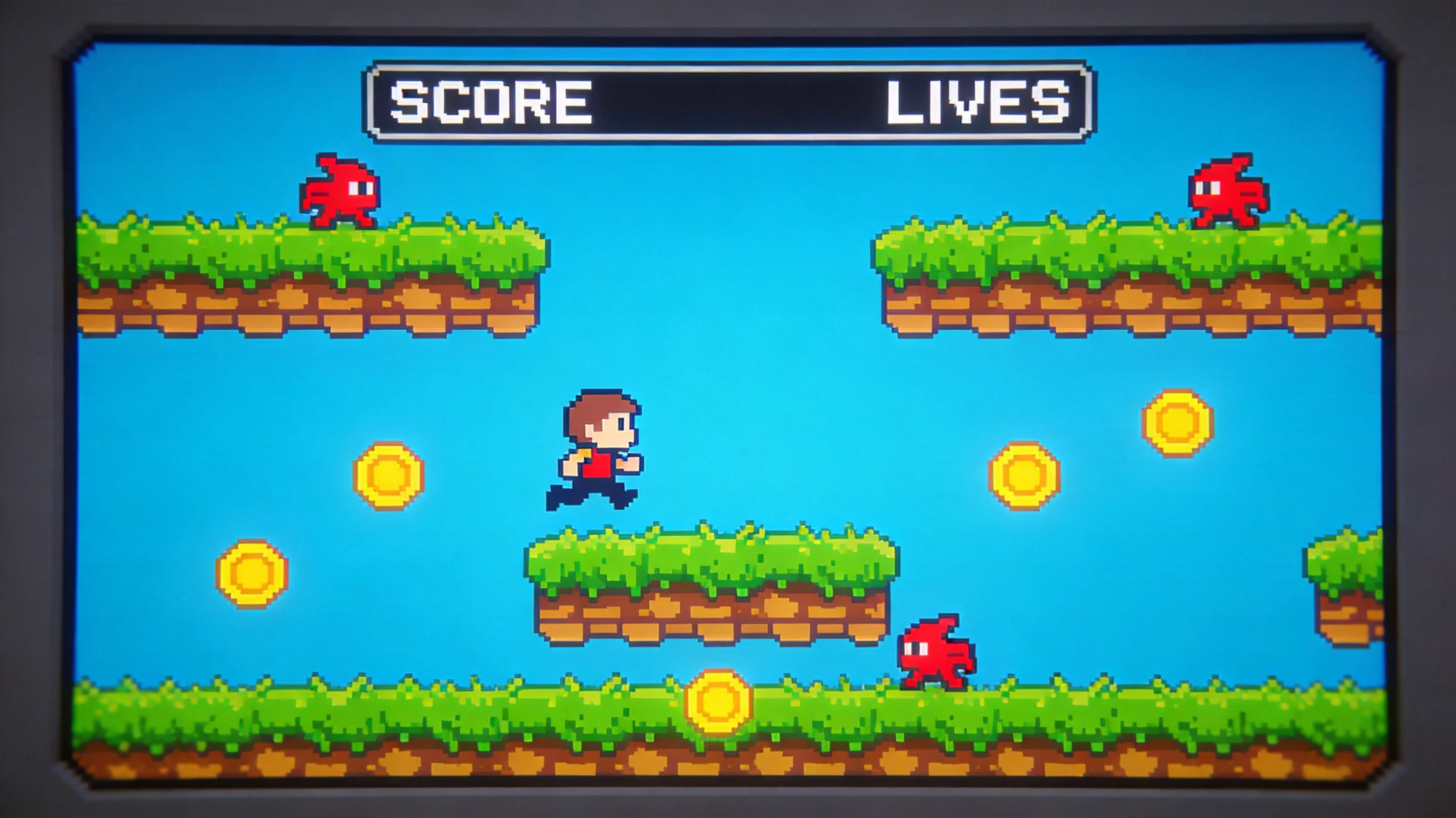
The third decade of open-source gaming is the one we are living in now, and it is shaped by two parallel revolutions.
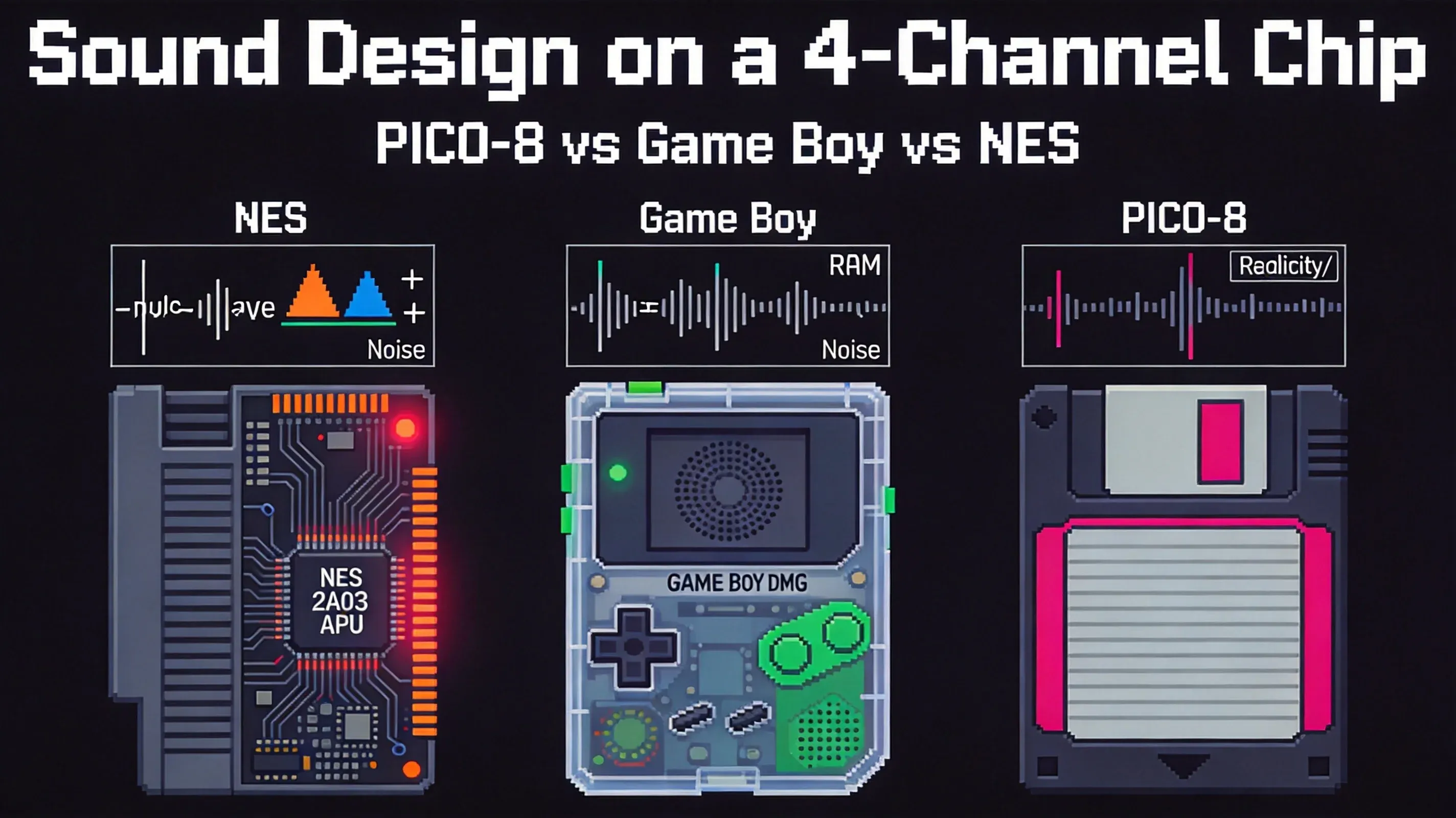
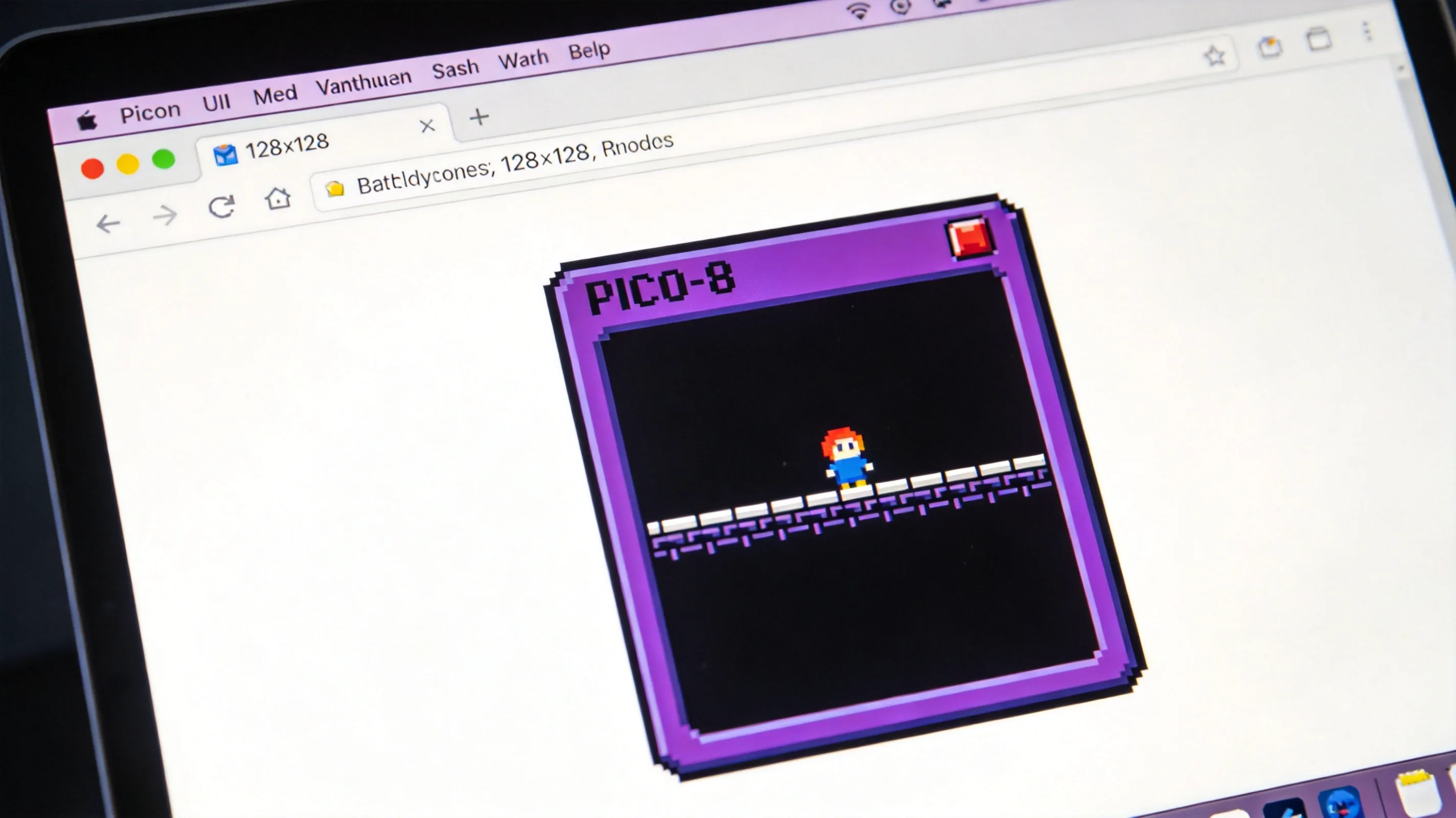
The first is the fantasy console movement. In 2015, the developer known as Lexaloffle released PICO-8, a virtual console that simulates a deliberately limited 8-bit machine: 128x128 pixel resolution, 16 colors, 8192 tokens of code, 32 kilobytes of cartridge storage. PICO-8 is not an emulator. There is no original hardware to emulate. It is a creative constraint packaged as a development environment. It's also, I should mention, genuinely fun to use.
The constraint was the point. By building within the same hardware limits as the original NES, PICO-8 forces developers to be as creative as the programmers who made Mega Man and Castlevania in 1987. I've spent a few evenings in the PICO-8 editor myself, and let me tell you: 8192 tokens runs out faster than you'd think. The PICO-8 community has produced thousands of free games over the past decade. Most are forgettable. Some are remarkable. The best of them show what an 8-bit machine can do when the people writing the code actually care about getting every last cycle out of the CPU.
PICO-8 spawned imitators — TIC-80, Pixel Vision 8, CHIP-8, and others — but PICO-8 remains the dominant fantasy console. The BBS that Lexaloffle built for sharing PICO-8 cartridges is itself a piece of open-source infrastructure, and the cultural pattern of "make a tiny game, share it for free, get feedback, iterate" maps cleanly onto the shareware model of the early 1990s. The main difference is you don't have to mail a check to Louisiana anymore.
The second revolution is WebAssembly. WebAssembly — a binary instruction format that runs near-native performance in web browsers — has been quietly doing what no previous platform migration achieved: making open-source games playable in a browser with a single click. No installers. No downloads. No DRM. The original promise of the free cartridge, finally delivered at scale. I'm not entirely sure why WebAssembly took so long to arrive. The technology feels obvious in retrospect, like it was always waiting to happen.
This is what makes CRTPlay.com possible. Our 31 open-source games run in the browser because their source code, originally written in C or Lua or assembly, can be compiled to WebAssembly and loaded as part of a normal web page. The compilation is not magic. The games are real, full versions of the source code, not emulators running copyrighted ROMs. The user clicks "Play," the page loads, the game runs. If the user closes the tab, the game is gone. Nothing is installed. Nothing persists. The open-source model and the web platform finally fit together.
§5 CRTPlay's Position
I started CRTPlay.com in 2025 with a simple question: what would a website look like if it treated open-source games the same way Steam treats commercial games? Not as code samples. Not as legal artifacts. As games you actually want to play. I realize that sounds obvious, but it took me a while to arrive at it.
As of June 2026, the site hosts 31 playable open-source titles. They cluster into three worlds, and the differences between those worlds are part of what makes open-source gaming interesting in 2026. I'll be honest: I didn't plan the distribution. It just worked out that way.
The first world is the modern revival of classic consoles. Ten of our 31 titles are NES games — Thwaite, Nova the Squirrel, Sk8Border, Concentration Room, Antsy Alien Attack, Double Action Blaster Guys, 256rpg, RHDE: Furniture Fight, and two more — written in 6502 assembly by hobbyists who fell in love with the original hardware. They are not emulators running copyrighted ROMs. They are open-source games built from scratch for the Nintendo Entertainment System, complete with new art, new music, and new level designs that respect what the original developers did without copying it. Two Game Boy titles and two Game Boy Advance titles round out this category. The first world is about preservation through recreation. I think that's the most honest way to put it.
The second world is the fantasy console revolution. Sixteen of our 31 titles run on PICO-8. The constraint is the whole appeal — the 128x128 pixel resolution, the 16-color palette, the 8192 tokens of code. The community has produced thousands of free games, and the signal-to-noise ratio is exactly what you would expect. We curate the ones that hold up. I've played about 200 of them myself so you don't have to. The best ones do something clever within the limits, and I've found that the most creative PICO-8 developers treat the 8192-token limit the same way a haiku poet treats 17 syllables. It is not a bug. It is the feature that makes the good work stand out.
The third world is a single original title we wrote ourselves. It is not the most ambitious thing on the site. But it is the proof of concept that open-source development is not just about preservation — it is also a way to make new things. I won't tell you which one it is. That would ruin the fun.
Our position in the ecosystem is deliberately narrow. We do not modify the games we host. We do not repackage them. We do not sell them. We provide a discoverability and accessibility layer — a place where someone can find a high-quality open-source game, play it in their browser without installing anything, and click through to the source repository if they want to study the code, fork it, or build on top of it. The 31 games on CRTPlay.com are a sample, not a collection. The full breadth of open-source gaming lives on GitHub, GitLab, and SourceForge. We are a window into that world, not the world itself. I think that's a comfortable position to occupy.
Conclusion
Thirty years after Wolfenstein 3D's source code went public, the open-source gaming movement looks very different from what John Carmack must have imagined in 1995. The engines have evolved. The community has multiplied. The web has changed what it means to distribute software at all. But the core idea is unchanged. When someone releases the source code to a game, they are saying: this belongs to everyone now. Take it. Play it. Change it. Ship it. The only thing I ask in return is that you do the same. I'm paraphrasing, but that's the spirit of it.
The next chapter is already being written. WebAssembly is making it possible to play open-source games anywhere a browser runs. Fantasy consoles are training a new generation of developers to be creative within constraints. NES homebrew is producing games that the original 1985 developers would have recognized as part of the same tradition. And projects like CRTPlay.com are trying to make the discovery of these games as easy as the discovery of commercial games on Steam. We're not doing it perfectly, but we're doing it. We are not there yet. But 30 years in, we have a very good start.
References
- Wolfenstein 3D Source Release (1995) — id Software's original source release of Wolfenstein 3D, posted July 21, 1995.
- DOOM Source Release Announcement (1997) — The December 23, 1997 release announcement, in Spanish.
- QUAKE Source Release (1999) — The December 22, 1999 release of the QUAKE engine source code.
- ioquake3 Project — Community-maintained engine fork updating QUAKE III for modern systems.
- OpenArena Project — Complete first-person shooter built on the QUAKE III engine with entirely new content.
- FreeCiv Project — Open-source turn-based strategy game inspired by Civilization, active since 1996.
- OpenTTD Project — Open-source recreation of Transport Tycoon Deluxe, active since 2004.
- OpenGameArt.org — Community repository for freely shared game art assets, launched 2009.
- NESdev Wiki — Community documentation for NES hardware programming and homebrew development.
- PICO-8 by Lexaloffle — Official page for the PICO-8 fantasy console, released 2015.
- WebAssembly Official Site — Open standard for near-native performance in web browsers.
- CRTPlay.com — Curated collection of playable open-source games in the browser.